

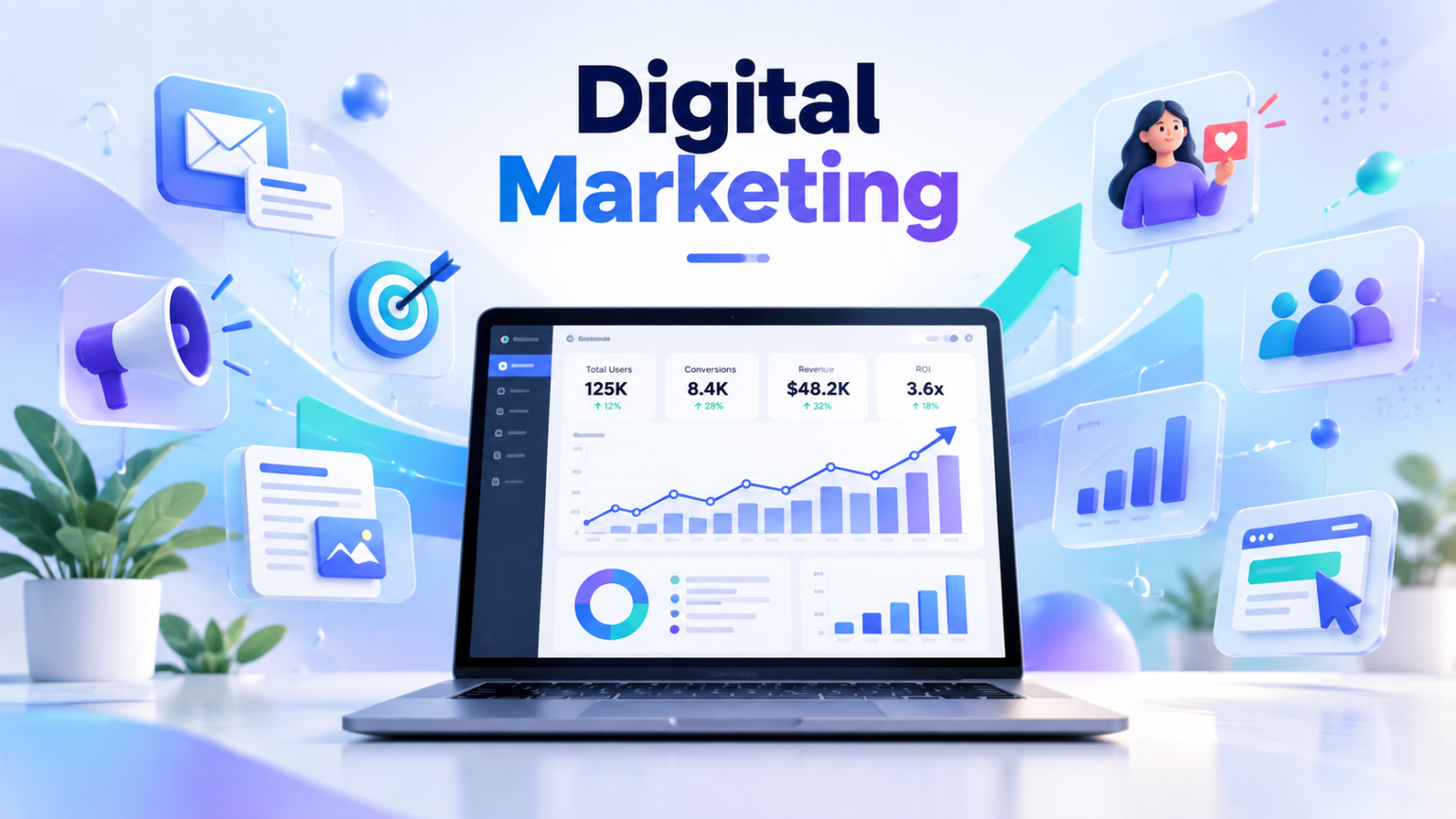
Performance marketing is an approach where marketing decisions are closely tied to measurable outcomes.
These outcomes might include:
- Leads
- Purchases
- Registrations
- App installs
- Revenue
Performance marketers continuously test and optimize campaigns to improve efficiency.
Performance Marketing Channels
Common channels include:
- Google Ads
- Meta Ads
- Affiliate marketing
- Paid social
- Display advertising
- Retargeting
Core Metrics
Cost Per Click
The amount paid for each advertising click.
Cost Per Lead
Advertising expenditure divided by leads generated.
Cost Per Acquisition
The average marketing cost required to generate a customer or defined conversion.
Conversion Rate
The percentage of users completing the desired action.
Return on Ad Spend
Revenue generated compared with advertising expenditure.
Creative Testing
Advertising creative significantly influences performance.
Marketers should test:
- Headlines
- Images
- Videos
- Offers
- Calls to action
Testing should be systematic so teams can understand what caused performance changes.
Audience Testing
Different audience groups behave differently.
Marketers can test:
- Demographics
- Interests
- Remarketing audiences
- Customer lists
- Lookalike audiences
However, targeting alone cannot compensate for a weak offer.
Landing Page Optimization
The landing page is where advertising traffic converts.
Marketers should evaluate:
- Message alignment
- Loading speed
- Mobile experience
- Forms
- Calls to action
- Trust elements
Improving conversion rate can dramatically improve campaign economics.
Full-Funnel Performance
Performance marketing should not focus exclusively on the final purchase.
Some campaigns create awareness while others convert existing demand.
Businesses should therefore evaluate the role of each campaign within the customer journey.
Strong performance marketing combines accurate tracking, compelling creative, strong offers, relevant audiences, and continuous experimentation.


 I’m Piyush, an AI Search & Growth Marketing professional with 9+ years of experience building search-led acquisition systems, scalable content ecosystems, and performance-driven growth strategies for B2B technology companies.