

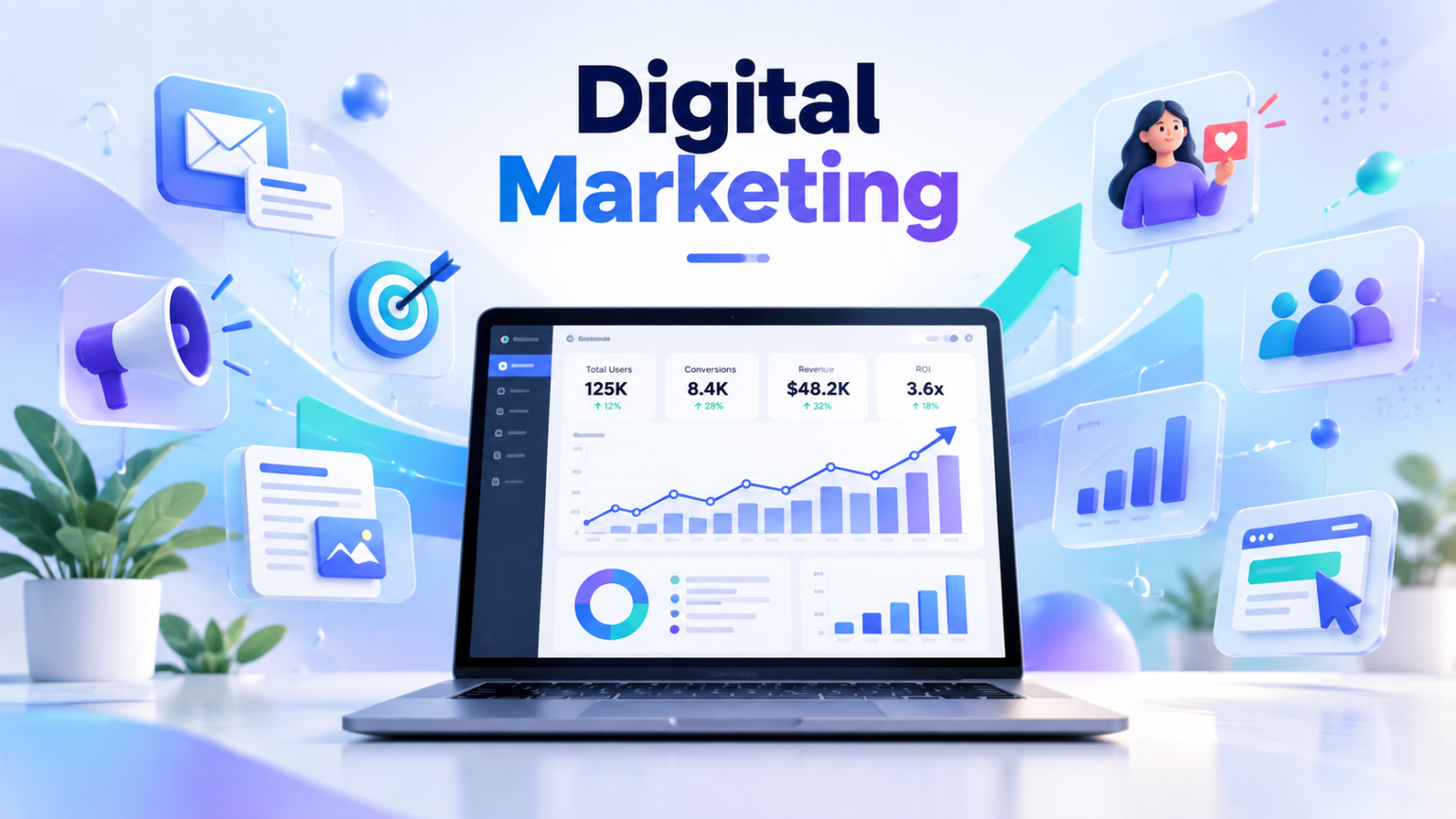
Digital marketing generates enormous amounts of data.
Analytics helps businesses convert that data into useful decisions.
Without measurement, marketing teams may continue investing in activities without understanding whether those activities contribute to business growth.
What Digital Analytics Measures
Analytics can answer questions such as:
- How many people visit the website?
- Where do visitors come from?
- Which pages attract traffic?
- Which campaigns generate leads?
- Where do users abandon the journey?
- Which channels generate revenue?
Users and Sessions
A user represents an individual visitor.
A session represents a period of interaction.
One user can generate multiple sessions.
Understanding this difference helps marketers interpret website behaviour correctly.
Traffic Sources
Common traffic channels include:
- Organic search
- Paid search
- Social
- Referral
- Direct
Analyzing channels helps marketers understand customer acquisition.
Events
Modern analytics platforms often track user interactions as events.
Examples include:
- Page views
- Button clicks
- Video plays
- Form submissions
- Purchases
Businesses should configure important events based on their objectives.
Conversion Funnels
A funnel represents steps users complete before conversion.
An ecommerce funnel may look like:
Product Page
↓
Add to Cart
↓
Checkout
↓
Purchase
Marketers can identify where users drop off and investigate possible problems.
Attribution
Customers frequently interact with several marketing channels before converting.
For example:
Google Search → Blog
Instagram → Website
Email → Product Page
Purchase
Attribution analysis attempts to understand how different touchpoints contributed to the conversion.
Important Marketing KPIs
Metrics might include:
- Conversion rate
- Cost per acquisition
- Customer acquisition cost
- Return on ad spend
- Revenue
- Customer lifetime value
Marketers should select KPIs according to business objectives.
Turning Data Into Decisions
Analytics becomes valuable only when it changes actions.
If mobile users convert significantly less than desktop visitors, the team should investigate mobile experience.
If a particular content category generates qualified leads, the business may produce more content around that topic.
If one advertising audience consistently generates low-quality leads, spending can be reduced.
Data should therefore produce hypotheses, experiments, and decisions.
Analytics is the measurement system connecting all digital marketing channels.


 I’m Piyush, an AI Search & Growth Marketing professional with 9+ years of experience building search-led acquisition systems, scalable content ecosystems, and performance-driven growth strategies for B2B technology companies.