

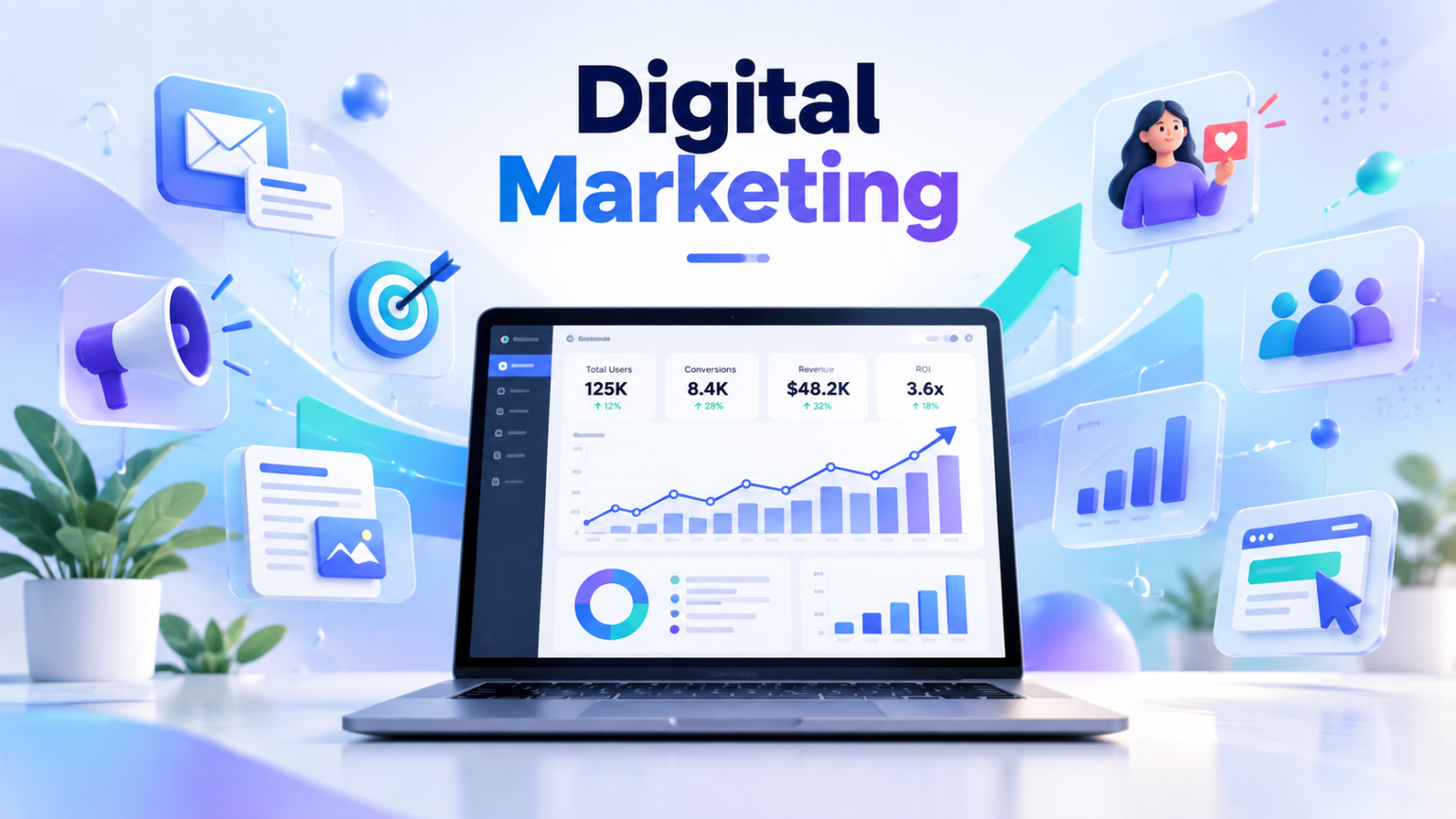
Pay-per-click advertising allows businesses to purchase targeted digital traffic.
Google Ads is one of the most widely used PPC platforms.
Advertisers can display advertisements when users search for specific terms or interact with content across Google's advertising ecosystem.
How PPC Works
In many PPC models, advertisers pay when someone clicks their advertisement.
However, campaigns can also optimize toward:
- Leads
- Sales
- Calls
- App installs
- Store visits
Advertising platforms use auctions to determine which advertisements appear.
Factors can include bids, relevance, expected performance, and landing-page quality.
Search Advertising
Search advertising displays ads when users actively search.
For example, someone searching:
"SEO consultant Delhi"
is demonstrating commercial intent.
A relevant company can advertise for that search.
Search advertising can therefore capture existing demand.
Display Advertising
Display campaigns show visual advertisements across websites and apps.
They can support:
- Awareness
- Remarketing
- Product promotion
Display audiences generally have lower immediate intent than search audiences.
Video Advertising
Video advertising allows brands to reach audiences on platforms such as YouTube.
Video can be effective for storytelling, product demonstrations, and awareness.
Shopping Advertising
Ecommerce businesses can use product-focused advertising that displays product images, prices, stores, and other information.
These campaigns are particularly useful for users already comparing products.
Keyword Strategy
Keyword selection significantly affects search advertising performance.
Advertisers should consider:
- Search intent
- Competition
- Commercial value
- Relevance
Negative keywords can prevent advertisements from appearing for irrelevant searches.
Landing Pages
Advertising does not end at the click.
Users must arrive on a page that matches their expectations.
A strong landing page should include:
- Clear headline
- Relevant offer
- Benefits
- Trust signals
- Strong call to action
- Fast loading
- Mobile-friendly design
Poor landing pages can waste advertising budgets.
Conversion Tracking
Businesses should track actions such as:
- Purchases
- Lead forms
- Calls
- Registrations
- Subscriptions
Without conversion tracking, marketers may optimize campaigns based on clicks instead of actual business outcomes.
Important PPC Metrics
Common metrics include:
CTR
Click-through rate measures how many impressions resulted in clicks.
CPC
Cost per click indicates the average amount paid for each click.
Conversion Rate
This measures the percentage of users completing the desired action.
CPA
Cost per acquisition measures how much is spent to generate a conversion.
ROAS
Return on advertising spend compares revenue generated with advertising expenditure.
Continuous Optimization
Successful PPC campaigns require ongoing experimentation.
Marketers test:
- Keywords
- Audiences
- Advertisement copy
- Creative
- Bids
- Landing pages
- Offers
Performance marketing is fundamentally an optimization process.
The objective is not simply buying traffic.
It is converting marketing expenditure into measurable business results.


 I’m Piyush, an AI Search & Growth Marketing professional with 9+ years of experience building search-led acquisition systems, scalable content ecosystems, and performance-driven growth strategies for B2B technology companies.